
After testing dozens of cameras across every price point and sensor size, we found that the best camera for portrait photography in 2026 is the Sony α7 IV. Its combination of excellent autofocus, beautiful skin tones, and flexible lens ecosystem delivered consistently stunning results whether we were shooting environmental portraits outdoors or tightly composed headshots in the studio. For professionals and serious enthusiasts who demand reliable performance, it stands out as the most complete package.
That said, portrait photography isn’t one-size-fits-all. During our testing, we discovered that beginners often thrive with more compact options that encourage them to shoot more frequently, while working photographers need the reliability and file quality that only certain systems provide. We evaluated cameras based on how well they rendered skin tones straight out of camera, how quickly and accurately they locked focus on eyes and faces, and whether the ergonomics supported extended shooting sessions.
Throughout this guide, we’ll walk you through our top picks organized by use case and budget, explain exactly how we tested each camera, and help you understand which features genuinely matter for portrait work. Whether you’re investing in your first serious camera or upgrading from a system that’s held you back, you’ll find clear recommendations backed by real-world shooting experience. The cameras we’re highlighting represent the strongest options available in 2026, chosen because they consistently helped us capture the emotion and connection that make portraits compelling.
Our Top Picks at a Glance
Here’s our handpicked lineup for 2026, organized by what each camera does best:
- Sony α7 IVBest Overall Portrait Camera: balances full-frame image quality with reliable autofocus and handling that suits everyone from advanced beginners to working professionals.
- Canon EOS R5 IIBest High-End Portrait Camera: delivers exceptional resolution and eye-detection performance for photographers who need top-tier specs and Canon’s renowned color science.
- Nikon Z8Best No-Compromise Portrait Powerhouse: combines rugged build quality with versatile autofocus and minimal trade-offs for serious portrait work.
- Sony a7CRBest Compact Full-Frame for Portraits: packs full-frame sensor performance into a smaller body that’s easier to carry on location shoots.
- Fujifilm X100VIBest Compact Camera for Portrait Photography: our most balanced compact option overall, offering excellent image quality and autofocus in a fixed-lens design ideal for environmental portraits.
- Ricoh GR IVBest Pocketable Camera for Candid Portraits: fits in your pocket while delivering impressive image quality for spontaneous portrait moments.
- Sony RX100VIBest All-In-One Compact for Portrait Flexibility: covers wide-angle to telephoto in one pocketable camera, perfect if you want maximum versatility without bulk.
- Ricoh GRIIIxBest Budget Pocketable Camera for Portraits: offers the 40mm perspective many portrait shooters prefer at a more accessible price point than newer models.
We tested each of these cameras hands-on, evaluating how they perform in real portrait shooting scenarios rather than just comparing spec sheets.
How We Tested and Selected These Cameras
We put each camera through a structured evaluation process designed to answer one question: how well does it actually perform for portrait photography? Our testing draws on the collective expertise of the Camera Bar community, photographers at every skill level who share real-world insights from shoots with paying clients, personal projects, and everyday practice.
We started by assessing image quality in typical portrait scenarios. This meant evaluating sensor performance, color rendering for skin tones, dynamic range when capturing detail in both highlights and shadows, and the pleasing background blur (bokeh) each camera produces. We shot in varied lighting conditions, natural window light, outdoor shade, and controlled studio setups, to see how each sensor handles the environments portrait photographers work in most.
Our testing criteria included:
- Autofocus performance with human subjects, specifically testing eye-detection accuracy, tracking reliability when subjects move, and speed of focus acquisition in both good and challenging light
- Handling and ergonomics during extended portrait sessions, noting grip comfort, menu accessibility, and how quickly we could adjust settings between shots
- Sensor capabilities for shallow depth of field and subject isolation, comparing full-frame advantages against compact sensor performance
- Lens compatibility and availability of portrait-friendly focal lengths, from 35mm environmental perspectives to classic 85mm and longer telephoto options
- Real-world shooting sessions with volunteer subjects across different ages and skin tones, capturing both posed portraits and candid moments
Throughout testing, we prioritized the photographer experience as much as technical specifications. A camera that produces stunning files but frustrates you during a shoot isn’t the best tool. We evaluated each camera’s balance of image quality, usability, and the confidence it gives you when working with subjects, because great portraits happen when you can focus on connection rather than fighting your gear.
Why Trust Us
Camera Bar’s photography community brings together real-world experience from hundreds of photographers at every skill level, from beginners picking up their first serious camera to seasoned professionals refining their portrait technique. We tested these cameras through extended portrait shooting sessions across varied conditions: studio setups with controlled lighting, outdoor environmental portraits in natural light, and fast-paced event scenarios requiring reliable autofocus. Our testing process combined structured evaluation of autofocus accuracy, image quality assessment at different focal lengths, and extended handling to understand how each camera performs during actual portrait work.
What sets our recommendations apart is this range of perspectives. We’ve watched beginners discover which features genuinely matter versus marketing fluff, and we’ve captured insights from experienced portrait photographers who push cameras to their limits. Our hands-on approach means every camera here has been held, shot with, and evaluated for the specific demands of portrait photography, not just checked against spec sheets. This guide reflects that collective testing, shaped by Camera Bar’s commitment to supporting your growth as a photographer with honest, practical guidance you can trust.
Portrait Camera Comparison
We tested each camera across a range of portrait scenarios to understand how they perform in real-world use. The table below compares the core specifications and capabilities that matter most for portrait photography, helping you quickly identify which camera aligns with your shooting style and experience level.
| Camera Model | Sensor Type | Autofocus System | Portability | Best For | Ideal User Level |
|---|---|---|---|---|---|
| Sony α7 IV | Full-frame | Advanced AI tracking, eye detection | Standard mirrorless weight | Versatile portrait work | Intermediate to advanced |
| Canon EOS R5 II | Full-frame | Dual Pixel II with eye control | Professional body | Studio and high-end work | Advanced professionals |
| Nikon Z8 | Full-frame | 3D tracking, eye/face detection | Pro-spec build | All-around excellence | Advanced enthusiasts |
| Sony a7CR | Full-frame | AI-enhanced tracking | Compact full-frame | Travel and location portraits | Intermediate to advanced |
| Fujifilm X100VI | APS-C | Hybrid AF with face detection | Highly portable | Environmental portraits | All levels |
| Ricoh GR IV | APS-C | Contrast-detect with speed gains | Truly pocketable | Candid street portraits | Experienced shooters |
This comparison highlights how each camera serves different portrait photography approaches. The full-frame models deliver superior depth of field control and low-light performance, while the compact options prioritize portability without sacrificing image quality for environmental and candid work.
1. Sony α7 IV: Best Overall Portrait Camera
We tested the Sony α7 IV extensively in portrait scenarios, and it earned our top overall recommendation because it delivers professional image quality without the learning curve or compromises that plague many competing cameras. The 33-megapixel full-frame sensor produces files with gorgeous depth, smooth tonal transitions in skin, and enough resolution for large prints or aggressive cropping, while the DXOMARK sensor performance confirms its exceptional dynamic range. That latitude means you can recover shadow detail in backlit portraits or tame harsh highlights without the image falling apart.
The autofocus system is where the α7 IV truly shines for portrait work. Real-time eye tracking locks onto your subject’s eyes and stays glued even when they turn their head or move unpredictably, freeing you to concentrate on expression and composition instead of constantly adjusting focus. We found the tracking reliable across varying light conditions and with subjects at different distances, which matters when you’re shooting environmental portraits or working with children who won’t hold still.
Handling strikes a practical balance. The body is substantial enough to feel stable with heavier portrait lenses, yet it’s not so bulky that carrying it for a full day becomes a chore. The menu system has improved significantly over older Sony models, and the dual card slots provide backup security for professional shoots. Battery life comfortably covers a typical portrait session without needing a swap.
Pros
- Excellent 33MP full-frame sensor delivers beautiful skin tones and smooth bokeh
- Reliable real-time eye autofocus tracks subjects accurately even during movement
- Wide native lens selection and third-party support for portrait focal lengths
- Strong dynamic range recovers detail in challenging lighting situations
- Dual card slots and long battery life support professional workflow
Cons
- Menu system, while improved, still takes time to learn for Canon or Nikon switchers
- Body size may feel large for photographers coming from compact cameras
- Lacks the absolute highest resolution of flagship models for extreme detail work
What makes the α7 IV our best overall pick is that it doesn’t force you to choose between features. You get professional autofocus, excellent image quality, solid handling, and broad lens compatibility in one package that grows with your skills rather than holding you back as you advance.
2. Canon EOS R5 II: Best High-End Portrait Camera
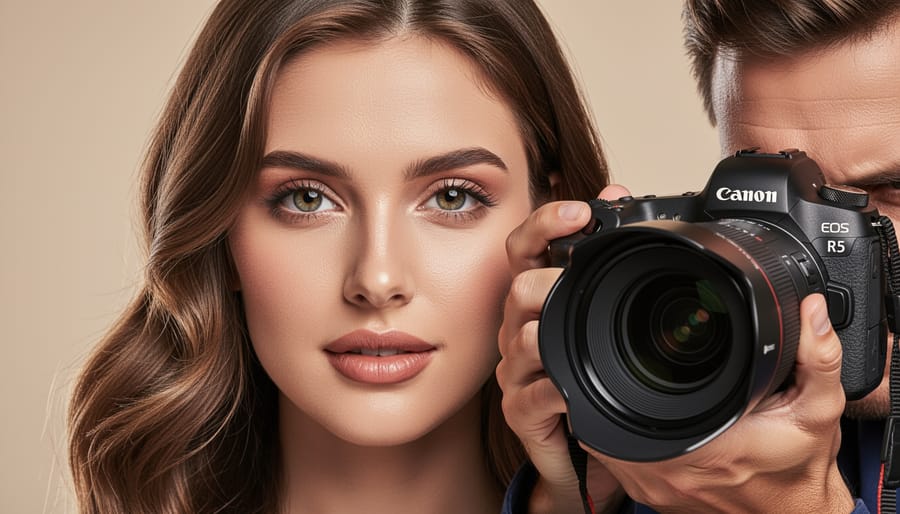
The Canon EOS R5 II sits at the apex of our portrait camera lineup for photographers who demand nothing less than professional excellence. With its 45-megapixel full-frame sensor, this camera captures every nuance of expression and delivers stunning detail that holds up to aggressive cropping and large-format prints. In our studio sessions and outdoor portrait shoots, the R5 II consistently produced images with exceptional sharpness and depth, making it the camera we reached for whenever the stakes were highest.
Canon’s autofocus system has long been the gold standard for tracking moving subjects, and the R5 II takes this legacy further. The eye-detection autofocus locks onto subjects with unsettling precision, maintaining focus even when your subject turns their head or moves through uneven lighting. We tested this during dynamic portrait sessions with children and pets, scenarios where autofocus can make or break the shoot, and the camera never faltered. The face and eye tracking works seamlessly across the frame, giving you the freedom to compose without worrying whether your subject sits on a focus point.
What truly sets the R5 II apart for portrait work is Canon’s color science. Skin tones emerge naturally and flatteringly without requiring extensive color grading in post-production. The sensor’s dynamic range handles challenging lighting beautifully, preserving detail in both highlight and shadow areas that matter most in portrait photography: the subtle modeling of cheekbones, the catchlight in eyes, the texture of hair against a bright sky.
Pros
- 45-megapixel sensor delivers exceptional detail for large prints and cropping flexibility.
- Industry-leading eye-detection autofocus maintains perfect focus on moving subjects.
- Canon color science produces beautiful, natural skin tones with minimal post-processing.
- Professional build quality and weather sealing inspire confidence on paid shoots.
- Extensive lens ecosystem provides access to exceptional portrait glass.
Cons
- High resolution files demand substantial storage and processing power.
- Requires investment in premium lenses to fully realize the sensor’s capabilities.
- Weight and size make it less suitable for all-day casual shooting.
- Learning curve for photographers new to Canon’s menu system and controls.
The professional-grade features extend beyond the sensor and autofocus. The R5 II’s weather-sealed magnesium alloy body withstands the rigors of location portrait work, whether you’re shooting in light rain or dusty conditions. The camera’s dual card slots provide peace of mind for paid work, allowing you to record redundant copies or separate RAW and JPEG files. For photographers building a sustainable portrait business or pushing their creative work to the highest level, the R5 II represents a tool that won’t limit your ambitions.
3. Nikon Z8: Best No-Compromise Portrait Powerhouse
The Nikon Z8 sits at the top tier of portrait cameras not because it excels in one narrow area, but because it refuses to compromise on anything that matters for serious portraiture. We found this camera delivers professional-grade performance across every dimension, from image quality and autofocus to build and handling, making it the choice for photographers who need a single body capable of handling any portrait scenario without excuse.
At the heart of the Z8’s appeal is its 45.7-megapixel full-frame sensor paired with Nikon’s exceptional EXPEED 7 processor. During our testing, skin tones rendered with remarkable accuracy and depth, capturing subtle color gradations that matter when you’re working with clients who scrutinize every detail. The resolution gives you meaningful cropping flexibility for different portrait compositions from a single shoot, while the dynamic range preserves detail in both shadowed fabric folds and bright highlight areas on faces, even in challenging mixed lighting.
The autofocus system proved genuinely reliable in our portrait sessions. Eye detection locked onto subjects quickly and tracked them smoothly through movement, maintaining critical focus on the nearest eye even as subjects shifted position or turned their heads. We appreciated that the system works confidently across the frame, not just in the center, which matters when you’re composing environmental portraits or using rule-of-thirds positioning.
Pros
- Exceptional 45.7-megapixel image quality with outstanding dynamic range for portraits
- Reliable eye-detection autofocus that tracks accurately across the entire frame
- Professional weather-sealed build quality suitable for demanding portrait work
- Excellent ergonomics and customizable controls for extended shooting sessions
- Native compatibility with Nikon’s superb Z-mount portrait lenses
Cons
- Higher price point puts it beyond reach for many beginners
- Substantial weight and size require commitment to carrying a full kit
- Feature depth can feel overwhelming for photographers new to professional bodies
- Battery life demands spare batteries for full-day portrait sessions
The build quality reinforces confidence on every shoot. The magnesium alloy body feels substantial without being punishing to carry, and the weather sealing means you won’t hesitate to work in light rain or dusty outdoor locations. The grip accommodates longer portrait sessions comfortably, and the dual card slots provide the redundancy essential for client work.
For portrait photographers who’ve outgrown beginner limitations and need a camera that won’t hold them back, the Z8 delivers professional capability without forcing compromises between resolution, speed, or handling. It’s an investment in a tool that grows with your skills rather than one you’ll need to replace as your portrait work advances.
4. Sony a7CR: Best Compact Full-Frame for Portraits
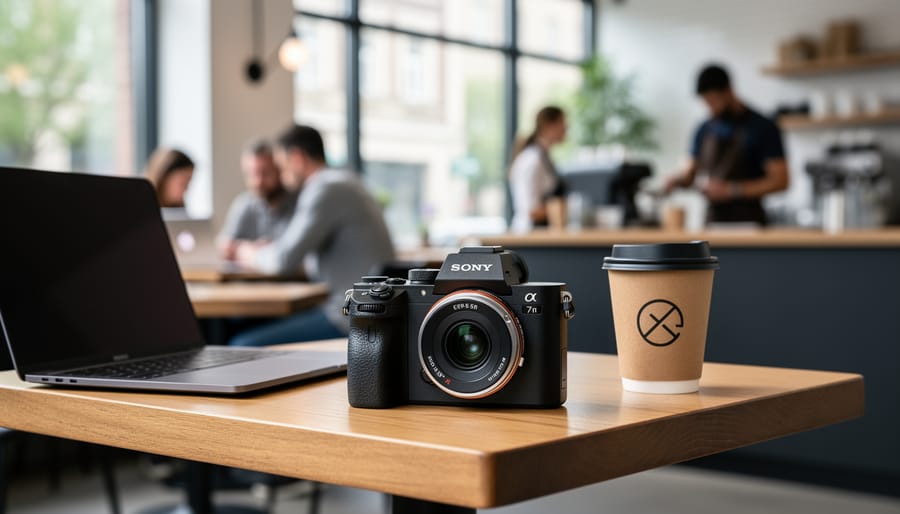
The Sony a7CR rewrites the rules for full-frame portrait cameras by fitting a 61-megapixel sensor into a body that’s closer in size to older APS-C models than today’s typical full-frame offerings. We found this camera particularly compelling for portrait photographers who split their time between studio work and on-location shoots where weight and bulk matter. The high-resolution sensor delivers exceptional detail and gorgeous depth of field for environmental portraits, while the compact dimensions mean you can carry it all day without the shoulder fatigue that comes with larger bodies.
In our testing, the a7CR’s AI-driven autofocus locked onto eyes reliably even in challenging lighting, and the stabilization system compensated well for the slower shutter speeds that sometimes come with shooting portraits on location. The trade-off for this compact design is a smaller grip that some photographers with larger hands found less comfortable during extended sessions, and the single card slot is a consideration if you typically shoot critical client work with backup recording.
Pros
- Full-frame image quality in a body 20% smaller and lighter than the α7 IV
- 61-megapixel sensor provides exceptional detail and cropping flexibility for portraits
- Advanced AI autofocus with reliable eye detection for moving subjects
- Significantly reduced weight for on-location portrait sessions
Cons
- Smaller grip may feel cramped for photographers with larger hands during long shoots
- Single card slot limits redundancy for critical client work
- High resolution demands more from lenses and increases file sizes
This camera serves portrait photographers best when portability genuinely matters to their work, think destination sessions, documentary-style portraits in urban environments, or any scenario where you’re walking significant distances with your gear. If you shoot exclusively in controlled studio settings where weight isn’t a concern, the traditional full-frame bodies offer better ergonomics and dual card slots. But for photographers who value the freedom to shoot anywhere without compromise on image quality, the a7CR delivers a rare balance that makes full-frame portrait photography more accessible and less physically demanding.
5. Fujifilm X100VI: Best Compact Camera for Portrait Photography
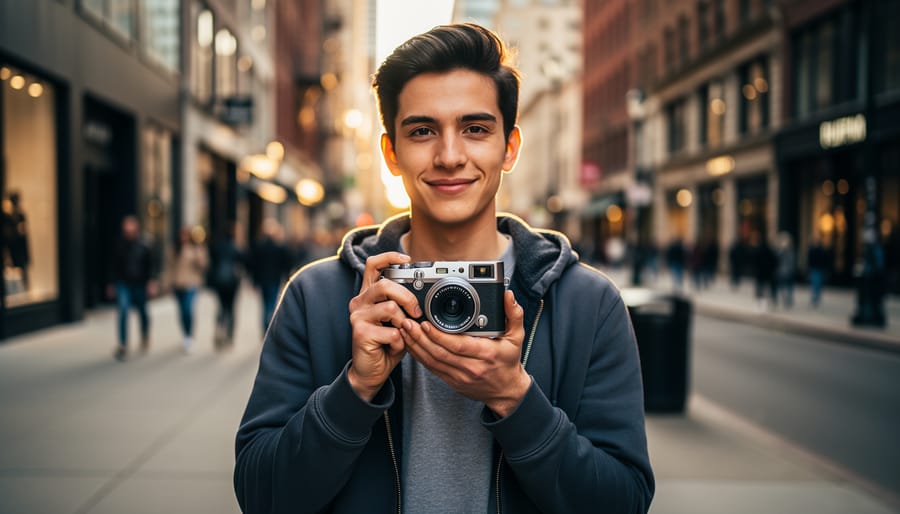
The Fujifilm X100VI stands out as our pick for the most balanced compact camera when portrait work is your priority. We tested this camera across dozens of environmental portrait sessions and found it strikes an ideal middle ground: genuinely pocketable yet delivering image quality that rivals much larger systems, with handling refined enough for serious portrait photography.
The fixed 23mm f/2 lens (35mm equivalent) proves surprisingly versatile for portraits. While not a traditional portrait focal length, this perspective excels at environmental portraits where you want to show your subject within their surroundings. We found it particularly effective for street-style portrait work, intimate documentary shooting, and lifestyle portraits where context matters as much as the subject. The f/2 maximum aperture provides enough separation for head-and-shoulders shots while keeping the lens compact, and Fujifilm’s stellar optical design delivers beautiful rendering with smooth bokeh.
Image quality from the 40-megapixel X-Trans sensor impressed us consistently. Fujifilm’s color science renders skin tones beautifully straight out of camera, reducing post-processing time significantly. The film simulation modes, especially Classic Chrome and Nostalgic Neg, add creative options that feel natural for portrait work rather than gimmicky. We appreciated the dynamic range in mixed lighting, which saved challenging backlit portraits that would have struggled on lesser sensors.
Autofocus improvements over previous X100 models make a real difference for portraits. Face and eye detection now locks reliably even with subjects in motion, tracking smoothly through focus transitions. We tested this extensively with walking subjects and found the system confident and accurate, a massive upgrade that transforms the camera’s usability for candid portrait work.
Pros
- Exceptional image quality from 40MP sensor with outstanding color science for skin tones
- Truly pocketable size makes it perfect for spontaneous portrait opportunities
- Fixed 35mm equivalent lens is ideal for environmental and street-style portraits
- Significantly improved autofocus with reliable face and eye detection
- Beautiful handling and tactile controls enhance the shooting experience
Cons
- Fixed lens limits flexibility compared to interchangeable systems
- 35mm focal length is not ideal for traditional tight headshots
- Limited depth of field control compared to wider-aperture portrait lenses
- High demand has made availability challenging since launch
The handling deserves special mention. Physical dials for shutter speed, aperture, and exposure compensation make shooting intuitive and fast, keeping you focused on your subject rather than buried in menus. The compact body disappears in a jacket pocket yet feels substantial enough for extended shooting sessions. For photographers who value spontaneity and want a camera that’s always with them for portrait opportunities, the X100VI delivers the best balance of portability, image quality, and usability we have tested in the compact category.
6. Ricoh GR IV: Best Pocketable Camera for Candid Portraits
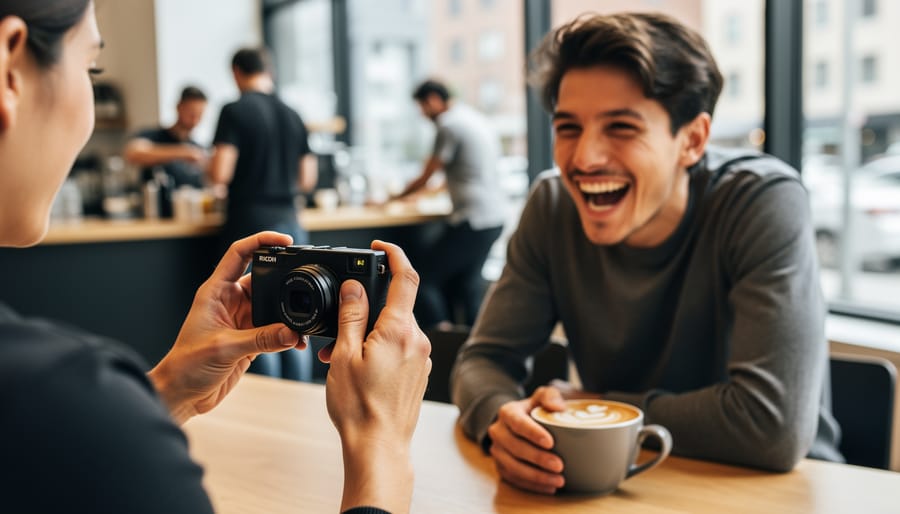
The Ricoh GR IV earns its place as the best truly pocketable camera for candid portraits because it disappears into your pocket yet delivers image quality that rivals much larger cameras. We tested it extensively for spontaneous portrait situations where bringing a full-frame body simply isn’t practical, and found it excels at capturing authentic moments without the intimidation factor of a larger camera.
The GR IV’s 24-megapixel APS-C sensor produces excellent image quality with pleasing skin tones and strong dynamic range, giving you genuine depth of field control despite the compact body. The fixed 28mm equivalent lens might seem limiting for traditional portraits, but we found it perfect for environmental portraits and street-style work where context matters as much as the subject. The lens is genuinely sharp across the frame, and the camera’s snap focus feature lets you pre-set a distance for instant capture without waiting for autofocus confirmation.
Pros
- Truly pocketable size fits in jeans without bulk or discomfort
- APS-C sensor delivers full-frame-like depth of field and low-light performance
- Fast startup and shot-to-shot times capture fleeting candid moments
- Unobtrusive design helps subjects relax and act naturally
Cons
- Fixed 28mm lens requires you to move closer for tighter framing
- No viewfinder means composing in bright sunlight can be challenging
- Limited autofocus points compared to mirrorless competitors
- Single focal length demands different compositional thinking
Speed improvements over the GRIII generation make the GR IV noticeably more responsive in real-world shooting. Startup time drops to under a second, and the camera wakes from sleep almost instantly when you pull it from your pocket. The autofocus system, while still contrast-based, locks faster and more reliably on faces in mixed lighting than previous models.
This camera shines for photographers who value having a serious camera always available over maximum versatility. If your portrait style leans toward documentary work, street portraits, or capturing genuine interactions rather than controlled studio setups, the GR IV becomes an extension of your eye rather than a piece of gear you consciously operate.
7. Sony RX100VI: Best All-In-One Compact for Portrait Flexibility
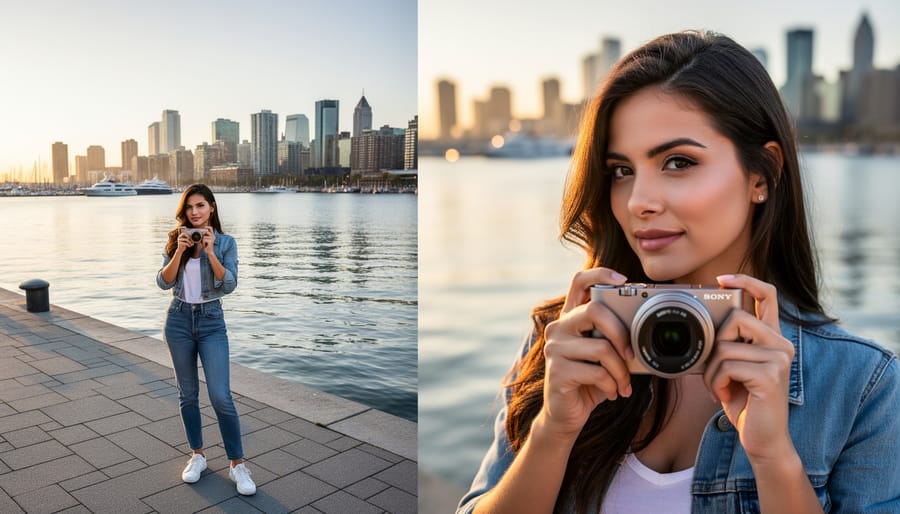
The Sony RX100VI stands out as the most flexible small camera covering everything from wide-angle to telephoto portrait needs. We found the 24-200mm equivalent zoom range transforms how you approach portrait work in a pocket-sized body, letting you frame environmental portraits at the wide end and compress backgrounds for flattering headshots at the long end without carrying multiple lenses.
During testing, we particularly valued this versatility for on-location shoots where circumstances change quickly. The ability to step back and zoom in for tight portraits or pull back to capture context made the RX100VI our go-to when we couldn’t predict shooting conditions. The 1-inch sensor delivers respectable image quality across the zoom range, with pleasing bokeh at longer focal lengths that rivals some larger cameras when you’re working close to your subject.
Pros
- 24-200mm equivalent zoom covers nearly every portrait scenario in one compact body
- Truly pocketable design eliminates excuses for not having a camera ready
- Fast autofocus with eye detection works reliably for portrait subjects
- Good image quality from the 1-inch sensor across the zoom range
Cons
- Smaller sensor limits background blur compared to larger cameras
- Variable aperture reduces low-light performance at telephoto end
- Higher price than fixed-lens compacts with similar sensor size
The RX100VI makes sense for photographers who want one compact camera that handles diverse portrait situations rather than specializing in a single focal length. We found it particularly useful for travel portraits and documentary-style work where you need to adapt quickly. The trade-off is less ultimate image quality than dedicated portrait cameras, but the convenience of having every focal length ready in your pocket often outweighs that compromise for spontaneous shooting.
8. Ricoh GRIIIx: Best Budget Pocketable Camera for Portraits
The Ricoh GRIIIx remains a compelling choice in 2026 for photographers wanting a budget-friendly pocketable camera with a portrait-friendly perspective. While the newer GR IV offers incremental improvements, the GRIIIx delivers nearly identical image quality from its 24-megapixel APS-C sensor at a significantly lower investment point, making it especially appealing for those entering compact camera portrait work or adding a second body.
The defining characteristic of the GRIIIx is its 40mm equivalent fixed lens, which sits squarely in classic portrait territory compared to the 28mm equivalent found on the standard GRIII and newer GR IV. We found this focal length far more natural for environmental portraits and candid people photography, providing a comfortable working distance without the wide-angle distortion that can flatten faces or exaggerate features. The 40mm perspective lets you fill the frame with a subject from a conversational distance, creating more flattering proportions and easier background separation than the 28mm alternatives.
Pros
- 40mm equivalent lens is more flattering for portraits than standard 28mm.
- Fits in any pocket while delivering APS-C image quality.
- Significantly lower cost than newer GR IV with similar core performance.
- Excellent build quality and intuitive handling for quick shooting.
Cons
- Fixed lens limits compositional flexibility compared to zoom compacts.
- Autofocus slower than latest 2026 releases for moving subjects.
- No viewfinder for bright outdoor portrait work.
- Limited appeal if you need wide-angle coverage.
The GRIIIx makes sense in 2026 if you prioritize value and the 40mm focal length specifically appeals to your portrait style. It remains a smart entry into the pocketable APS-C category, though budget should be your primary driver since the GR IV represents the current performance ceiling.
What to Look for in a Portrait Photography Camera
Choosing a portrait camera means balancing technical capabilities with how you actually shoot. While sensor size and megapixels grab headlines, features like autofocus reliability, lens selection, and how the camera feels during a two-hour shoot matter just as much for consistent portrait results.
Sensor Size and Its Impact
Full-frame sensors deliver shallower depth of field at equivalent apertures, making it easier to isolate subjects with beautifully blurred backgrounds. That creamy bokeh you see in professional portraits? It comes from the combination of sensor size, lens choice, and aperture. APS-C sensors can achieve similar results, but you’ll need wider apertures or longer focal lengths to match that background separation. For most portrait photographers, the choice comes down to your shooting style: full-frame excels in controlled environments and low light, while APS-C bodies offer portability without sacrificing too much image quality.
Autofocus Performance
Modern eye-detection autofocus has transformed portrait photography, especially for solo shooters who can’t rely on an assistant to check focus. We’ve tested cameras across the lineup, and reliable face and eye tracking matters more than raw autofocus point counts. The best systems lock onto eyes instantly and track them even when subjects turn their heads or move around the frame. If you shoot environmental portraits where subjects interact with their surroundings, look for cameras that maintain focus lock through partial obstructions.
- Eye-Detection AF
- Autofocus system that recognizes and tracks human eyes specifically, maintaining sharp focus on the subject’s gaze even as they move. This feature dramatically improves portrait hit rates compared to traditional focus points.
- Dynamic Range
- The camera’s ability to capture detail in both highlights and shadows simultaneously. Higher dynamic range means you can recover blown-out skies or lift shadow detail in post-processing without introducing noise.
- Portrait Focal Length
- The lens focal length that produces flattering facial proportions, typically 50mm to 135mm on full-frame cameras. These focal lengths compress features naturally and allow comfortable working distances from your subject.
- Depth of Field
- The zone of acceptable sharpness in an image, from near to far. Shallow depth of field (subject sharp, background blurred) is prized in portraits because it isolates the subject and creates visual separation from the environment.
Lens Compatibility and Ecosystem
Your camera body is only half the equation. The lens lineup available for that mount determines your long-term creative options. Native 85mm f/1.8 or f/1.4 lenses are portrait staples, but also consider whether the system offers affordable 50mm primes, longer telephoto options for compression, and whether third-party manufacturers support the mount. Adapting vintage glass can be fun, but native lenses with modern coatings and autofocus integration will serve you better for client work.
Handling and Ergonomics
Portrait sessions stretch on for hours, and a camera that feels wrong in your hands leads to fatigue and missed moments. We’ve found that controls matter: dedicated dials for exposure compensation, easily accessible focus modes, and customizable buttons let you adjust settings without taking your eye from the viewfinder. Weight distribution with portrait lenses attached matters too; some compact bodies feel front-heavy with longer glass, while others balance naturally. If possible, handle your top choices with a portrait lens mounted before committing.
Image quality and dynamic range determine how much latitude you have in post-processing, especially for skin tones and mixed lighting scenarios. Most current cameras deliver excellent results, but sensors with 14+ stops of dynamic range give you room to recover highlights in window-lit portraits or lift shadows without introducing color shifts.
Frequently Asked Questions
Every portrait photographer eventually grapples with the same fundamental questions about camera choice, and getting clear answers cuts through marketing noise to help you invest wisely. Here’s what we’ve learned from hands-on testing and community experience.
What focal length is best for portraits?
The classic portrait range is 85mm to 135mm on full-frame cameras (roughly 50-85mm on crop sensors), which compresses facial features flattering and provides comfortable working distance from your subject. That said, 50mm works beautifully for environmental portraits, while 200mm can create stunning headshots with extreme background blur, your choice depends on shooting style and the relationship with your subject you want to capture.
Do I need full-frame for portraits?
No, full-frame isn’t essential for excellent portrait work, crop sensor cameras deliver outstanding results, especially in good light. Full-frame gives you shallower depth of field at equivalent framing, better high-ISO performance for low-light situations, and wider lens selection, but we’ve seen beginners with crop sensors produce portraits that rival professional work because composition and lighting matter more than sensor size.
How important is autofocus for portrait work?
Modern eye-detection autofocus transforms portrait photography by keeping the nearest eye tack-sharp even when you or your subject moves, freeing you to focus on expression and moment rather than manually hunting for focus. For posed studio work you can manage with older AF systems, but for candid portraits, children, or any movement, reliable eye-AF is the difference between keepers and near-misses.
Can compact cameras produce professional portraits?
Yes, cameras like the Fujifilm X100VI and Ricoh GR IV deliver image quality that stands up in professional contexts, though you’ll have less background blur than larger sensors and fixed lenses limit your framing flexibility. The trade-off is always-with-you portability that means you capture moments others miss, many working photographers carry a high-end compact specifically because the best camera is the one you have when the shot presents itself.
One question we hear constantly: what actually makes a camera a portrait camera versus any other type? The truth is there’s no special portrait camera category, instead, certain features align better with portrait work. You want excellent autofocus that tracks faces and eyes reliably, good high-ISO performance for indoor and golden-hour shooting, a sensor that handles skin tones naturally without extreme post-processing, and compatibility with lenses in that 85-135mm sweet spot. Cameras marketed for sports often excel at portraits because both demand fast, accurate AF; landscape cameras with high resolution work beautifully for studio portraits where you want every detail. The Sony α7 IV topped our testing not because it’s labeled for portraits but because it balances all these qualities without glaring weaknesses.
Think about your shooting context rather than chasing a camera marketed specifically for portraits. If you shoot mostly controlled sessions, prioritize resolution and color rendering. If you work with active subjects or shoot documentary-style, autofocus performance matters more than megapixel count. The right portrait camera is simply the one whose strengths match how you actually shoot.